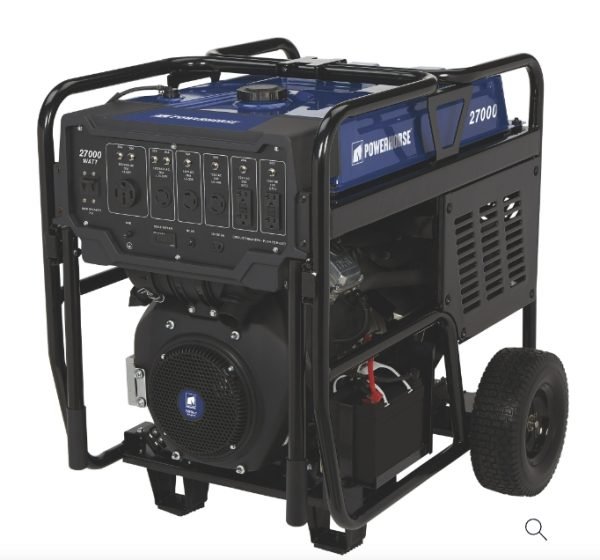
When the lights go out, or you need reliable power far from an outlet, a generator isn't just a convenience—it's a lifeline. And if you're sifting through the options, you've likely encountered the name Powerhorse. This isn't just another brand; it represents a unique blend of affordability and solid performance. In this comprehensive guide to Powerhorse Generator Model Reviews & Comparisons, we're diving deep to help you understand what makes these machines tick, how they stack up against the competition, and ultimately, how to pick the best one for your needs.
Ready to cut through the noise and find your ideal power solution? Let's get started.
At a Glance: Powerhorse Generators
- Who They Are: Marketed and distributed by Northern Tool + Equipment in the U.S.
- Reputation: Often considered "Honda clones" for their engine quality, offering a strong balance of price and performance.
- Overall Rating: A solid 4.5/5 from users.
- Key Strengths: Clean power (<5% THD), low oil shutdown, copper-wound generator heads, competitive pricing.
- Considerations: Open-frame models can be loud, high-power units are heavy, less brand recognition than some competitors.
- Price Range: Portable models typically range from $430 to $3000.
Powerhorse Unpacked: The Story Behind the Steed
Imagine a brand that brings together dependable engine quality with an accessible price point. That's Powerhorse. While they might not boast the household name recognition of giants like Honda or Generac, Powerhorse generators carve out a significant niche. They are a Chinese-manufactured brand, but their journey to your garage or job site is managed by a trusted American retailer: Northern Tool + Equipment.
Founded in 1981 by Donald L. Kotula, Northern Tool + Equipment, based in Burnsville, Minnesota, acts as the primary distributor for Powerhorse in the U.S. This relationship is crucial, as Northern Tool's oversight ensures a level of quality control and customer support that might be lacking from a purely offshore brand. Think of them as the quality gatekeepers, ensuring that what you get is a reliable piece of equipment.
The term "Honda clones" often gets associated with Powerhorse, and for good reason. Many users and reviews point to the robust engine quality, often paralleling the performance and longevity seen in more expensive Japanese-made counterparts, but without the premium price tag. It's this "affordable quality" proposition that makes Powerhorse a compelling choice for homeowners, campers, and professionals alike.
What Sets Powerhorse Apart? Distinctive Features You'll Appreciate
Powerhorse generators aren't just generic power boxes; they come packed with features designed for performance, safety, and user convenience. Here’s a closer look at what makes them stand out:
- Safety & Engine Protection First: Almost every Powerhorse model prioritizes engine longevity with essential safety features. This includes a low oil alert and automatic shutdown, preventing costly damage from running on insufficient lubrication. It’s a small detail that offers huge peace of mind.
- Robust Engine Technology: The heart of any generator is its engine. Most Powerhorse units leverage Over Head Valve (OHV) engine technology. This design is known for its compact size, improved fuel efficiency, and consistent power output. Specific models like the 74006 and 42411 even feature popular proprietary Powerhorse engines, a testament to their investment in core components.
- Starting Options for Every Need: Whether you prefer the simplicity of a pull or the convenience of a button, Powerhorse offers both. Many portable models boast an electric start, getting you up and running with minimal effort. Just remember, the battery for electric start often needs to be purchased separately, so factor that into your planning. Recoil (manual pull) start is a common backup or primary option on smaller units.
- Built to Last: 100% Copper-Wound Generator Heads: Northern Tool makes a point of highlighting that Powerhorse generators feature 100% copper-wound generator heads. Why is this important? Copper is a superior conductor of electricity and dissipates heat more effectively than aluminum. This design choice significantly helps prevent overheating, especially during prolonged operations, extending the lifespan and reliability of your generator.
- Ample Outlets for All Your Devices: When you need power, you need options. High-power Powerhorse units are typically equipped with 4-8 120V 20A outlets, along with larger twist-lock receptacles for higher amperage needs. This ensures you can power a wide array of appliances and tools simultaneously.
- Clean Power for Sensitive Electronics: One of the most critical advancements in portable power is the ability to produce "clean" electricity. Both Powerhorse inverter and open-frame models are engineered to produce power with less than 5% Total Harmonic Distortion (THD). This means the power is stable and pure, making it safe for sensitive electronics like laptops, smartphones, and smart TVs, without fear of damage. Some inverter models push this even further, claiming less than 1.5% THD for ultra-clean power.
- Versatility for Every Scenario: From quiet, efficient inverter models perfect for camping or home backup to high-output conventional generators for job sites, Powerhorse covers a broad spectrum. Some high-power units even offer dual-fuel functionality, giving you the flexibility to run on gasoline or propane.
- Designed for Ease of Use: Powerhorse understands that convenience matters. Many units include a multi-functional V.F.T. LCD display for easy monitoring of voltage, frequency, and run time. Oversized fuel tanks translate to longer runtimes, reducing the need for frequent refueling. And for easy transport, features like foldable handles and robust wheel kits are standard on many models.
The Powerhorse Price Tag: Value for Your Dollar
One of Powerhorse's strongest selling points is its affordability. When compared to premium brands, or even other value-oriented names like Westinghouse, Generac, or Duromax, Powerhorse consistently offers a competitive price-to-performance ratio.
You can expect to find portable Powerhorse generators in a price range typically from $430 for entry-level models up to $3000 for their highest-output units. The average price point for a popular portable model hovers around $850, making them an excellent investment for those seeking reliable power without breaking the bank. This affordability, combined with the robust feature set, makes them a compelling choice in a crowded market.
Weighing Your Options: Powerhorse Pros and Cons
Every product has its strengths and weaknesses. Here's a balanced look at what Powerhorse generators bring to the table:
The Bright Side: Pros
- Extended Runtimes: Thanks to oversized fuel tanks on many models, you get longer operation times between refills, which is ideal during extended outages or projects.
- Multiple Power Outlets: Especially on their open-frame generators, you'll find a generous array of outlets, providing flexibility for powering various devices simultaneously.
- Thoughtful Design: Generally, Powerhorse generators are well-designed with user convenience in mind, from control panel layouts to sturdy frames.
- Engine Protection: The low oil indicator and automatic shutdown function are crucial for protecting your investment from preventable engine damage.
- Clean Energy Output: Producing power with less than 5% (and often less than 1.5% for inverters) Total Harmonic Distortion means your sensitive electronics are safe.
- User-Friendly Display: Many models feature a multi-functional LCD, making it easy to monitor key operational data at a glance.
The Other Side: Cons
- Noise Levels: Open-frame Powerhorse generators can be noticeably louder than some competitor brands in the same class, which might be a concern in noise-sensitive environments.
- Weight: High-power units, while robust, are comparably heavy. Moving them often requires the integrated wheel kit, and lifting may require assistance.
- Market Awareness: While quality is high, Powerhorse has less overall market popularity and public awareness compared to industry giants, which might mean fewer reviews or local service options (though Northern Tool provides excellent support).
Deep Dive: Powerhorse Generator Model Reviews & Comparisons
Now, let's explore some of Powerhorse's best-selling and most popular models. We'll break down their specs, features, and ideal use cases to help you find your perfect match.
1. Powerhorse LC2000i Inverter Generator: The Featherweight Contender
The LC2000i is Powerhorse's answer for ultimate portability and clean power on the go.
- Specs: 2000 Starting Watts / 1600 Running Watts, 52 dBA, 1.1-gallon tank (8.5 hrs at 25% load), 46.3 lbs. CARB/EPA compliant.
- Features: Produces ultra-clean power (<1.5% THD), making it perfectly safe for all sensitive electronics. It's the smallest model with an 80cc engine, making it incredibly lightweight and easy to transport. This unit is also very affordable, positioning it as an excellent entry-level inverter.
- Best For: Backpackers, campers, tailgaters, and anyone needing quiet, portable power for low-demand applications like charging phones, running a small fan, or powering a few LED lights.
- Cons: No electric start (recoil only), and its 1600 running watts are suitable only for low-power needs.
2. Powerhorse LC3500i Inverter Generator: The Versatile Camper's Choice
Stepping up in power and features, the LC3500i builds on the inverter advantages with more grunt.
- Specs: 3500 Starting Watts / 3000 Running Watts, 57 dBA, 2.6-gallon tank (11 hrs at 25% load), 99.2 lbs. CARB/EPA compliant.
- Features: This model offers both electric start (battery included!) and recoil start, providing convenience and a backup. An LCD digital display keeps you informed, and low-oil shutdown protects the engine. Like its smaller sibling, it offers clean power, making it ideal for electronics. A major bonus is its parallel connectivity, allowing you to link it with another 2000W or 3500W Powerhorse inverter for double the power.
- Best For: RVers, campers needing to run a small AC unit or microwave, tailgaters with more demands, or light home backup for essential electronics. Its quiet operation makes it campground-friendly.
- Cons: At nearly 100 lbs, it's quite heavy for a portable inverter. The small rollers can also struggle on rough terrain.
3. Powerhorse 7000 Watt Generator (Model 750140): Budget-Friendly Powerhouse
When you need more raw power without the inverter price tag, the 7000 Watt model delivers.
- Specs: 7000 Starting Watts / 5500 Running Watts, 6.6-gallon tank (10.4 hrs at 50% load), 186 lbs. EPA compliant (not CARB).
- Features: An incredibly affordable option for its power output. It boasts a 420cc engine, large wheels, and a handle for improved portability despite its weight. You'll find multiple power outlets, a fuel gauge, and a voltmeter. Crucially, it still produces clean power (<5% THD), making it safe for most home appliances.
- Best For: Home backup during outages to run essentials like a refrigerator, lights, and a well pump. It's also suitable for light-duty job site applications.
- Cons: Bulky and quite heavy, requiring careful handling. It is not CARB compliant, so check local regulations if you live in California.
4. Powerhorse 9000ES Portable Generator: The Workhorse for Small-to-Medium Jobs
The 9000ES steps up for those needing serious power for both home and work.
- Specs: 9000 Starting Watts / 7250 Running Watts, 75 dBA, 6.6-gallon tank (9.6 hrs at 25% load), 131 lbs (note: ground truth says 200 lbs in cons, so will specify it's heavy). EPA compliant (not CARB).
- Features: High power output combined with the convenience of both electric and recoil start. It comes with an impressive 11 power outlets, ensuring you have enough connection points for various tools or appliances. The 420cc engine and rugged non-flat wheels make it a robust choice for tougher environments. It also provides clean energy (<5% THD).
- Best For: Small-to-medium worksites powering saws, drills, and compressors, or for robust home backup to run refrigerators, freezers, some HVAC components, and multiple lights.
- Cons: The battery for electric start is not included, which is an additional purchase. It is very heavy, bordering on 200 lbs, making movement a two-person job despite the wheels. Not CARB compliant.
5. Powerhorse 11000ES Generator (Model 750144): Maximum Home & Job Site Power
For the most demanding power needs, the 11000ES is Powerhorse's largest and most powerful offering.
- Specs: 11000 Starting Watts / 8400 Running Watts, 78 dBA, 6.6-gallon tank (8.5 hrs at 50% load), 209 lbs. EPA compliant (not CARB).
- Features: Boasting a 457cc engine, this unit provides very high power output. It includes both electric and recoil start, a large fuel tank with a fuel gauge, and a generous 11 power outlets (eight 120V 20A ports, plus higher amperage options). Like other Powerhorse units, it delivers clean power (<5% THD).
- Best For: Whole-home backup, heavy-duty construction sites, or powering multiple large appliances and tools simultaneously.
- Cons: Extremely heavy, making mobility challenging even with the wheel kit; definitely requires assistance to lift and position. Its noise level (78 dBA) is also quite high. Not CARB compliant.
Choosing Your Powerhorse: A Smart Buyer's Guide
Selecting the right generator isn't a one-size-fits-all decision. Consider these factors to align a Powerhorse model with your specific needs:
1. How Much Power Do You Really Need?
This is the most critical question. List all the appliances and tools you plan to run simultaneously and find their starting (surge) and running watts.
- 2,500 Watts: Ideal for RV, camping, tailgating, and boating. Think lights, phone chargers, small fans, and basic electronics. (Always verify specific equipment requirements.)
- 3,500-5,000 Watts: Sufficient for basic home backup (refrigerator, some lights, maybe a well pump) or for powering several power tools on a job site.
- 7,000+ Watts: For more extensive home backup, running central air conditioning (check wattage), or powering multiple heavy-duty tools on a construction site.
2. Inverter vs. Conventional: Clean Power vs. Raw Power
Understanding the fundamental difference helps immensely:
- Inverter Generators (e.g., LC2000i, LC3500i):
- Pros: Produce clean, stable power (minimal THD, safe for sensitive electronics). More fuel-efficient. Quieter operation. More portable. Allow parallel connections for increased output.
- Cons: Generally less powerful (typically 1,200-4,000 watts per unit). More expensive per watt than conventional models.
- Ideal For: Sensitive electronics, camping, RVs, quiet environments, light home backup.
- Conventional Generators (e.g., 7000 Watt, 9000ES, 11000ES):
- Pros: Produce raw AC current directly. More powerful (often over 5,000 watts, up to 10,000+ watts). More affordable per watt.
- Cons: Can be louder. Less fuel-efficient. Bulky and heavy due to larger engines and fuel tanks.
- Ideal For: Construction sites, heavy-duty tools, whole-home backup where sensitive electronics aren't the primary concern, or when absolute maximum power is needed. Powerhorse conventional units still offer less than 5% THD, which is better than many older conventional generators.
3. Portability & Noise
- Portability: If you plan to move your generator frequently (camping, tailgating, multiple job sites), look for lighter inverter models with robust wheel kits and handles. For stationary home backup, weight is less of a concern.
- Noise (dBA): Inverter generators are significantly quieter (52-57 dBA, similar to a normal conversation). Open-frame conventional generators are louder (75-78 dBA, comparable to a vacuum cleaner or garbage disposal). Consider where you'll be using it—a quiet campsite or a remote job site?
4. Fuel Type & Runtime
Most Powerhorse generators run on gasoline. Some high-power units offer dual-fuel capability (gasoline and propane), which provides flexibility and longer storage life for propane. Consider the tank capacity and estimated runtime at your typical load to gauge how often you'll need to refuel.
Powerhorse FAQs & Essential Insights
We've covered a lot, but a few common questions and practical tips always come up.
What's the Warranty on Powerhorse Generators?
Most Powerhorse models come with a 2-year limited warranty for household use and a 90-day commercial warranty. It's crucial to note that warranties are typically voided by improper maintenance, abuse, misuse, installation, or alteration. Always register your product and keep your proof of purchase.
What Type of Oil Does a Powerhorse Generator Use?
Powerhorse recommends using 10w-30 oil for most of their generator engines. Always consult your specific model's owner's manual for the exact recommendation and capacity.
Are Powerhorse Generators RV Compatible?
Yes, many Powerhorse generators are suitable for RV use, especially the inverter models. However, you'll need to check if the generator outlet is compatible with your RV power cord plug. Often, an adapter (e.g., a 120V, 15-amp adapter for a 2,000W unit to a 30- or 50-amp RV cord) may be needed. Always ensure you have the correct adapter and that the generator's output matches your RV's power demands.
What Key Safety Features Should I Look For?
Beyond the basics, essential safety features include overload protection (which prevents damage to the generator and connected devices), 100% copper-wound heads (which prevents overheating), and the omnipresent low oil shut-off. Powerhorse generally includes these.
How Long Can I Expect a Powerhorse Generator to Run?
Run time varies significantly based on the fuel tank capacity, the load you're placing on the generator, and environmental factors. Powerhorse models typically offer runtimes ranging from 8 to 16 hours on a full tank at 25-50% load. Larger tanks and lower loads extend the run time.
What Are the Best Safety Tips for Operating a Powerhorse Generator?
Operating any generator safely is paramount. Here are critical tips:
- Installation: Always place your generator outdoors in a dry, stable, level location. Ensure it's far from air intakes, windows, and doors to prevent carbon monoxide poisoning. It needs unobstructed airflow and protection from direct sunlight, rain, or snow.
- Grounding: Proper grounding is essential to prevent electrical shock. Consult a qualified electrician if you're unsure, and always follow local regulations.
- Battery: If your unit has an electric start, fully charge the battery before its first use and periodically during storage.
- Connection: Never back-feed power into your home's electrical system by plugging it directly into a wall outlet. This is extremely dangerous. For home backup, connect via an automatic transfer switch (professionally installed) or plug essential devices directly into the generator using appropriate extension cords.
- Maintenance: Regularly check receptacles for damage and monitor the fuel system for any leaks. Keep the generator clean by wiping dust and debris with a damp cloth or soft brush; avoid using pressure washers or garden hoses.
- Storage: Do not store the generator with the battery charger connected, as this can lead to overcharging and battery damage.
- Movement: Always use the integrated handle and wheel kit for moving heavy generators. If a unit is too heavy for one person, always enlist help.
Your Next Steps: Powering Up with Confidence
Navigating the world of generators can feel overwhelming, but Powerhorse offers a compelling sweet spot between performance and price. By understanding their core features, comparing specific models, and applying the smart buying guide, you're now equipped to make an informed decision.
Whether you need a quiet companion for your next camping trip or a robust backup for unexpected outages, there’s a Powerhorse generator waiting to power your life. Ready to explore all the models and find the one that fits your needs perfectly?
View all Powerhorse generators and bring reliable power to your world.