When the lights go out, the job site loses power, or your RV trip needs an extra boost, a reliable generator isn't just a convenience—it's a lifeline. But with so many options, navigating the market for a dependable power source can feel like a tangled mess of wires. This comprehensive Powerhorse Generator Buying Guide & Selection is designed to untangle that complexity, helping you choose the perfect Powerhorse model to keep your world running smoothly.
Consider this your backstage pass to understanding everything from wattage needs to advanced safety features, ensuring your purchase isn't just smart, but truly empowers your life.
At a Glance: Your Powerhorse Selection Checklist
- Determine Your Power Needs: Calculate required wattage for your essential appliances and tools.
- Choose Your Type: Decide between a conventional (portable) generator for raw power or an inverter generator for clean, quiet, and fuel-efficient operation.
- Prioritize Features: Look for electric start, wheel kits, RV readiness, parallel capability, and critical safety features like low oil shut-off and overload protection.
- Assess Run Time & Portability: Match fuel tank capacity and weight to your usage and mobility requirements.
- Understand Warranty & Support: Powerhorse offers a 2-year limited warranty for household use, backed by Northern Tool + Equipment.
- Always Practice Safe Operation: Generators are powerful tools; proper placement, grounding, and maintenance are non-negotiable.
The Power Behind the Horse: Understanding the Brand
Powerhorse generators are a product line from Northern Tool + Equipment, a trusted brand that’s been serving North America since 1981. With 74 stores and a strong reputation for selling robust equipment like air compressors, pressure washers, and welders, Northern Tool has carved out a niche for reliable tools. While Powerhorse generators are manufactured in China, they uphold the quality standards expected from a brand associated with a company dedicated to powering various aspects of your life, from home projects to professional job sites. This backing provides a level of assurance often missing from less established brands.
Conventional vs. Inverter: Decoding Generator Types
Before diving into specific models, it’s crucial to understand the two main types of generators Powerhorse offers. This fundamental distinction will shape your entire buying decision, impacting everything from the devices you can power to the noise level and fuel efficiency.
Portable (Conventional) Generators: Raw Power on Demand
Conventional portable generators are the workhorses of the power world. They directly produce AC current, offering substantial power output, often exceeding 10,000 watts. These generators are built for situations where sheer power capacity is paramount, such as backing up an entire home during an outage, powering heavy-duty tools on a construction site, or running multiple high-demand appliances.
Key Characteristics:
- High Power Output: Excellent for powering larger loads, including multiple appliances or tools simultaneously.
- Less Fuel-Efficient: They typically run at a constant engine speed (often 3600 RPM) regardless of the load, leading to higher fuel consumption.
- Louder Operation: The constant high engine speed means they are generally noisier than inverter generators.
- Bulkier Design: Larger engines and fuel tanks make them heavier and less portable, though most Powerhorse portable models come with wheel kits.
- Not for Sensitive Electronics: The "dirty" power (higher total harmonic distortion) can be risky for delicate devices like laptops, smartphones, or modern TVs.
Inverter Generators: Clean, Quiet, and Efficient
Inverter generators represent a more modern approach to portable power. Instead of directly producing AC current, they convert energy through a three-phase process: high-frequency AC, then DC, and finally, a stable AC current. This multi-step conversion results in significantly cleaner power with minimal harmonic distortion. Think of it like a perfectly smooth electrical current, ideal for sensitive electronics.
Key Characteristics:
- Clean Power: Produce electricity with very low total harmonic distortion (THD), making them safe for computers, smartphones, and other sensitive electronics.
- Fuel-Efficient: Variable engine speed (Engine Smart Control) allows the generator to adjust RPMs based on the power demand, saving fuel and extending run times.
- Quiet Operation: Lower engine speeds when less power is needed contribute to significantly quieter operation, making them perfect for camping, RVs, or tailgating.
- Compact & Portable: Generally lighter and smaller, often designed with convenient handles for easy transport.
- Parallel Capability: Many inverter models can be linked together (using a parallel kit) to combine their power output, offering flexibility without buying a single, larger unit.
- Lower Max Wattage: Typically range from 1,200 to 7,500 watts, making them suitable for many common applications but less so for whole-home backup.
Quick Comparison: Portable vs. Inverter
| Feature | Portable (Conventional) Generator | Inverter Generator |
|---|---|---|
| Power Output | High (often 5,000W+), direct AC | Moderate (1,200W-7,500W), clean AC (AC-DC-AC conversion) |
| Fuel Efficiency | Lower; constant engine speed | Higher; variable engine speed (matches load) |
| Noise Level | Louder (59+ dB) | Quieter (52-57 dB) |
| Sensitive Electronics | Not recommended | Safe (low THD) |
| Portability | Heavier, bulkier; often with wheels | Lighter, more compact; often with handles, sometimes wheels |
| Parallel Capability | No | Yes (many models) |
| Common Uses | Home backup, job sites, heavy tools | RVs, camping, tailgating, sensitive electronics, light home backup |
Powering Your Life: What Wattage Do You Really Need?
The single most important decision in buying a generator is determining your wattage needs. Overestimate, and you waste money and fuel; underestimate, and you'll be left in the dark.
Here’s how to calculate your needs:
- List Essentials: Make a list of all the appliances and tools you plan to run simultaneously.
- Find Starting & Running Watts: Each item has two wattage ratings:
- Starting (Surge) Watts: The brief burst of power needed to start motor-driven appliances (refrigerators, pumps, power tools). This is usually 2-3 times higher than running watts.
- Running (Rated) Watts: The continuous power needed to keep the appliance operating.
- Calculate Total Running Watts: Add up the running watts for all items you'll use at the same time.
- Add the Highest Starting Watts: Identify the item with the highest starting wattage on your list. Add only that one starting wattage to your total running watts. This gives you your minimum surge requirement.
Example Scenario:
- Refrigerator: 800 running watts / 2,000 starting watts
- TV: 100 running watts
- Lights: 200 running watts
- Phone Charger: 10 running watts
Total Running Watts: 800 + 100 + 200 + 10 = 1,110 watts
Highest Starting Watts (Refrigerator): 2,000 watts
Minimum Generator Size: Needs to handle 1,110 running watts and surge up to 2,000 watts.
General Wattage Recommendations: - 2,500 watts: Ideal for RVs, camping, tailgating, and boating. You'll power lights, small appliances, and charge devices. Always check your specific RV appliance requirements.
- 3,500-5,000 watts: Great for powering well water pumps, gas/electric heaters, refrigerators, microwaves, and most household appliances during an outage.
- 7,500+ watts: Suitable for more extensive home backup, running multiple large appliances, central AC (check specific AC unit wattage), or demanding job site tools.
Meet the Powerhorse Lineup: Finding Your Best Match
Powerhorse offers a diverse range of generators, each designed with specific applications in mind. Let's break down some of their top models, including our overall recommendation.
Our Pick for Best Overall: The Powerhorse 9,250-watt Portable Generator
If you're looking for a robust, versatile generator that strikes an excellent balance between power, features, and value, the Powerhorse 9,250-watt Portable Generator is our top recommendation.
- Power Output: Generous peak of 9,250W and a steady 7,500W running power. This can handle a significant portion of your home's essentials during an outage, including a refrigerator, freezer, well pump, and several lights and devices.
- Engine & Starting: Powered by a reliable 420cc 4-stroke OHV gasoline engine. You get the convenience of electric start (with pull start as a backup), making it easy to get going when you need it most.
- Run Time: A substantial 6.6-gallon tank provides approximately 9.6 hours of run time at 50% load, giving you nearly a full day of power without constant refueling.
- Outlets & Connectivity: Loaded with connectivity options: 6 AC outlets (including L5-30R and L14-30R for heavier loads), 2 DC outlets, and 2 USB ports. It's RV Ready (with an adapter) and transfer switch ready, allowing for safer and more integrated home backup.
- Portability & Safety: Despite its power, it’s manageable at 225 pounds, thanks to the included wheel kit and folding handle. Essential safety features like low oil auto shut-off and an overload circuit breaker are standard.
This model is a fantastic all-rounder for home backup, construction sites, or large events where reliable, sustained power is critical.
Other Powerful Portable Options
- Powerhorse 11,050-watt Portable Generator: When you need even more muscle, this unit delivers 8,400W running power (11,050W peak) from its 457cc engine. Similar to its 9,250W sibling, it includes electric/pull start, a 6.6-gallon tank (approx. 8.5 hours at 50% load), and robust outlets including a 14-50R for serious power. Weighing 260 pounds, it’s still mobile with a wheel kit and folding handle, making it a strong contender for whole-home backup or heavy-duty tasks.
- Powerhorse 7,000-watt Portable Generator: Designed for versatility, this generator is excellent for emergency power, camping, parties, tailgating, or powering tools. It boasts cast iron cylinder sleeves, forged crankshafts, and 100% copper-wound heads for exceptional durability and heat prevention. It features low oil shutdown, automatic voltage regulation, and a 6.2-gallon tank for long run times. A 2-year warranty and quiet operation add to its appeal.
- Powerhorse 11,000-watt Portable Generator (Rated 5,500W): Don't let the 11,000-watt designation confuse you; this model provides a robust 5,500W of rated power. What sets it apart is its low harmonic distortion (less than 5%), making it surprisingly safe for sensitive devices for a conventional portable unit. With a 100% copper-wound head and a generous array of outlets (including 8 x 120V 30A locking), it's built for heavy use where clean-ish power is a bonus. It comes with a wheel kit and low oil shutdown; just remember the electric start battery is sold separately.
The Powerhorse Inverter Generator Lineup: Quiet Power, Clean Performance
If quiet operation, fuel efficiency, and clean power for electronics are your priorities, Powerhorse inverter generators deliver.
- Powerhorse 7,500-watt Inverter Generator: This is a formidable inverter, offering 6,500 running watts (7,500 surge) with an impressively quiet 55 dB operation. It's dual 120/240 voltage capable and parallel-ready, allowing you to link it with another unit for even more power. With a copper-wound head, electric start (battery included), an automatic choke, and an engine idle mode for serious fuel savings, its 6.6-gallon tank can run for an exceptional 16 hours. Flat-free tires and folding handles complete this high-performance package.
- Powerhorse 3,500-watt Inverter Generator: This unit is a sweet spot for RVs, jobsites, tailgating, and group camping. Operating at a quiet 57 dB and delivering power with less than 2% harmonic distortion, it’s perfect for sensitive electronics. It features four wheels for easy mobility, Engine Smart Control for fuel efficiency, and is both EPA and CARB certified with a U.S. Forestry approved spark arrestor. Electric start (battery included) provides up to 11 hours of run time, and it’s parallel-ready with other 3,500W or 2,000W Powerhorse generators.
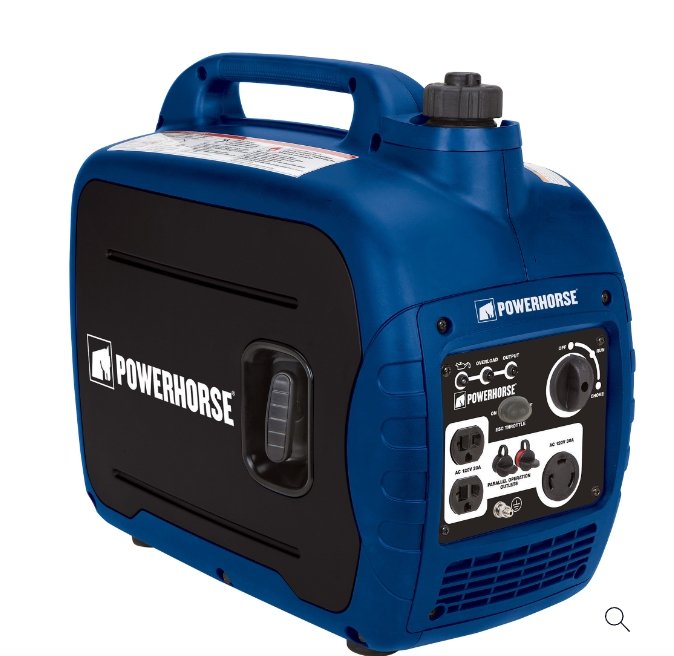
- Powerhorse 2,000-watt Portable Inverter Generator: The epitome of portability, this lightweight inverter weighs just 52.2 pounds, offering 1,600 operating watts and 2,000 surge watts. Its inverter technology produces ultra-clean power (under 1.5% THD), making it perfectly safe for your most delicate electronics. The Engine Smart Control system ensures maximum fuel efficiency, and it runs whisper-quiet at 52 dB. It's parallel-ready with a supplied cable to double its output to 3,200 watts, making it incredibly flexible for camping, light RV use, or remote work where silent, clean power is paramount. A sturdy handle makes it easy to carry anywhere.
Beyond the Watts: Crucial Features to Consider
While wattage is king, a generator's true value often lies in its supporting features. Don't overlook these critical aspects:
Essential Safety Features
Safety isn't just a bonus; it's non-negotiable. Powerhorse incorporates several key safety features:
- Overload Protection: This vital feature guards against dangerous overcurrents or short circuits that could damage the generator or connected devices. It automatically shuts down the unit if the load exceeds its capacity.
- 100% Copper-Wound Heads: Look for this. Copper windings are superior for conductivity and heat dissipation, preventing overheating during continuous operation at maximum load and extending the life of the generator.
- Low Oil Shut-off: A lifesaver for your engine. This system automatically turns off the generator if the oil level drops below the minimum safe threshold, preventing catastrophic engine damage.
Convenience & Durability Enhancements
- Electric Start: A game-changer, especially in an emergency. Many Powerhorse models offer electric start for quick, effortless ignition, often with a pull start backup. Check if the battery is included or sold separately.
- Wheel Kits and Folding Handles: Generators are heavy! A factory-included wheel kit and sturdy folding handle (like those on the Powerhorse 9,250-watt Portable Generator) make moving a 200+ pound machine infinitely easier.
- Extended Run Time: Generators vary from 8 to 16 hours of run time, depending on fuel tank capacity and load. For extended outages or overnight use, a larger tank or more fuel-efficient inverter can be a huge advantage.
- Low Harmonic Distortion (THD): For sensitive electronics, aim for less than 5% THD. Inverter generators often boast under 2%, making them ideal. Even some conventional units, like the 11,000-watt Powerhorse (rated 5,500W), offer improved THD.
- Engine Smart Control / Idle Mode: Found on inverter generators, these features adjust engine speed to match the load, dramatically improving fuel efficiency and reducing noise.
- RV Ready & Parallel-Capable: If you plan to use your generator for an RV, ensure it has the correct outlet (or an adapter) and sufficient power. Inverter generators often offer parallel connection to combine two units for more power without buying a larger, heavier single unit.
Power Up Safely: Your Guide to Generator Operation
Operating a generator requires careful attention to safety. Ignoring these guidelines can lead to carbon monoxide poisoning, electric shock, or fire.
Installation & Placement
- Outdoors Only: Always, always operate your generator outdoors. Never in a garage, shed, basement, or any enclosed space, even with doors or windows open.
- Ventilation is Key: Place it in a dry, stable, and level area, far from windows, doors, air intakes, and vents of your home or RV. Ensure ample, unobstructed airflow around the unit for proper cooling and exhaust dispersal.
- Protection from Elements: While operating outdoors, shield the generator from direct exposure to sunlight, rain, or snow using a canopy or open-sided shelter.
Grounding & Connection
- Proper Grounding: Consult a qualified electrician to ensure your machine is properly grounded according to local regulations and electrical codes. This is crucial for preventing electrical shock.
- Transfer Switch or Direct Plug-in:
- For home backup, connect the generator to your electrical system only via a professionally installed automatic transfer switch. This prevents backfeeding electricity into the utility grid, which can be fatal for utility workers.
- For portable use, plug essential devices directly into the generator's outlets. Use heavy-duty, outdoor-rated extension cords that are properly rated for the load.
Fueling, Inspection, and Maintenance
- Fueling Safety: Always fuel your generator when it is turned off and cool. Use fresh gasoline and store fuel in approved containers away from living areas.
- Pre-Use Inspection: Before each use, visually inspect all receptacles for damage, check oil levels, and ensure there are no fuel leaks.
- Regular Cleaning: Keep the generator free of dust, debris, and oil. Use a damp cloth or soft brush. Never use a pressure washer or garden hose, as water can damage electrical components.
- Battery Care: Fully charge the electric starter battery before insertion. When storing the generator for extended periods, disconnect the battery charger to prevent overcharging.
- Mobility: Generators are heavy. Always use the handle and wheel kit for movement. Never lift a heavy generator alone; ask for assistance. You can find more comprehensive advice on your guide to Powerhorse generators.
Common Questions About Powerhorse Generators
What is the Warranty for Powerhorse Generators?
Most Powerhorse generators come with a 2-year limited warranty for household use and a 90-day commercial warranty. This warranty covers defective parts or repairs due to manufacturing flaws. However, it's crucial to understand that the warranty can be voided by factors such as lack of proper maintenance, abuse, misuse, improper installation, or unauthorized alterations to the generator. Always consult your owner's manual for specific terms and conditions.
Are Powerhorse Generators RV Compatible?
Yes, many Powerhorse generators are RV compatible, but you might need an adapter. The key is to check if the generator's outlet is compatible with your RV's power cord plug.
For instance:
- A smaller 2,000W Powerhorse inverter generator might have standard 120V, 20-amp household outlets.
- Most RVs use either a 30-amp (3-prong) or 50-amp (4-prong) power cord.
- If your RV needs a 30-amp connection and your generator only has 20-amp outlets, you'll need a 120V, 15-amp to 30-amp RV adapter (or similar, depending on the specific outlets) to safely connect the two. Always ensure the adapter and generator can handle your RV's power requirements.
Making Your Confident Selection
Choosing the right Powerhorse generator means understanding your needs, weighing the advantages of portable versus inverter models, and prioritizing critical features like safety and reliability. By following this guide, you’re not just buying a machine; you’re investing in peace of mind, knowing you have a dependable power source ready for whatever comes next. Whether it's the robust power of the 9,250-watt portable model for home backup or the quiet, clean energy of a 3,500-watt inverter for your next adventure, Powerhorse offers a solution to keep you powered up.